Share
Is Your Business Ready for Payday Super from 1 July 2026?
 

Is Your Business Ready for Payday Super from 1 July 2026?


News | Mansi Sharma | Released: 01/07/2026 | Read: 5 Mins


From 1 July 2026, the Australian Government's Payday Super reforms have fundamentally changed how employers calculate, pay and report Superannuation Guarantee (SG) contributionsWhile the SG rate remains unchanged at 12%, the way employers meet their obligations will change significantly. The reforms are designed to improve retirement outcomes for employees by ensuring that super is paid more frequently and reaches employee accounts sooner.


For employers, payroll providers, accountants and advisers, the focus now should be on ensuring systems, processes and cash flow arrangements are ready before the new rules commence.


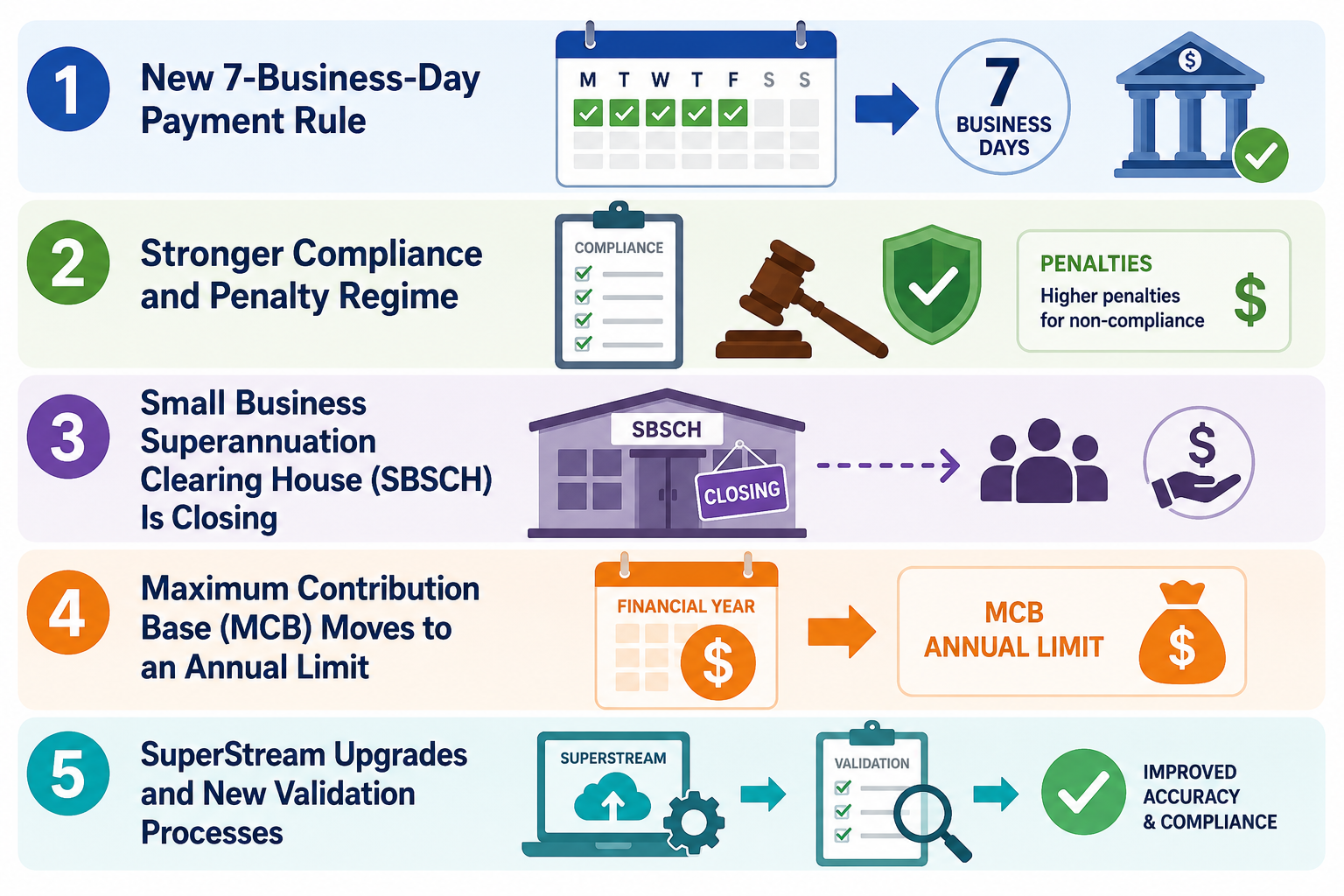
What Is Changing Under the New Payday Super Reforms?

https://stratus.campaign-image.com.au/images/27408000031842148_zc_v1_1773796813708_screenshot_2026_03_18_064923.png
   

1. WHEN MUST SG BE PAID?


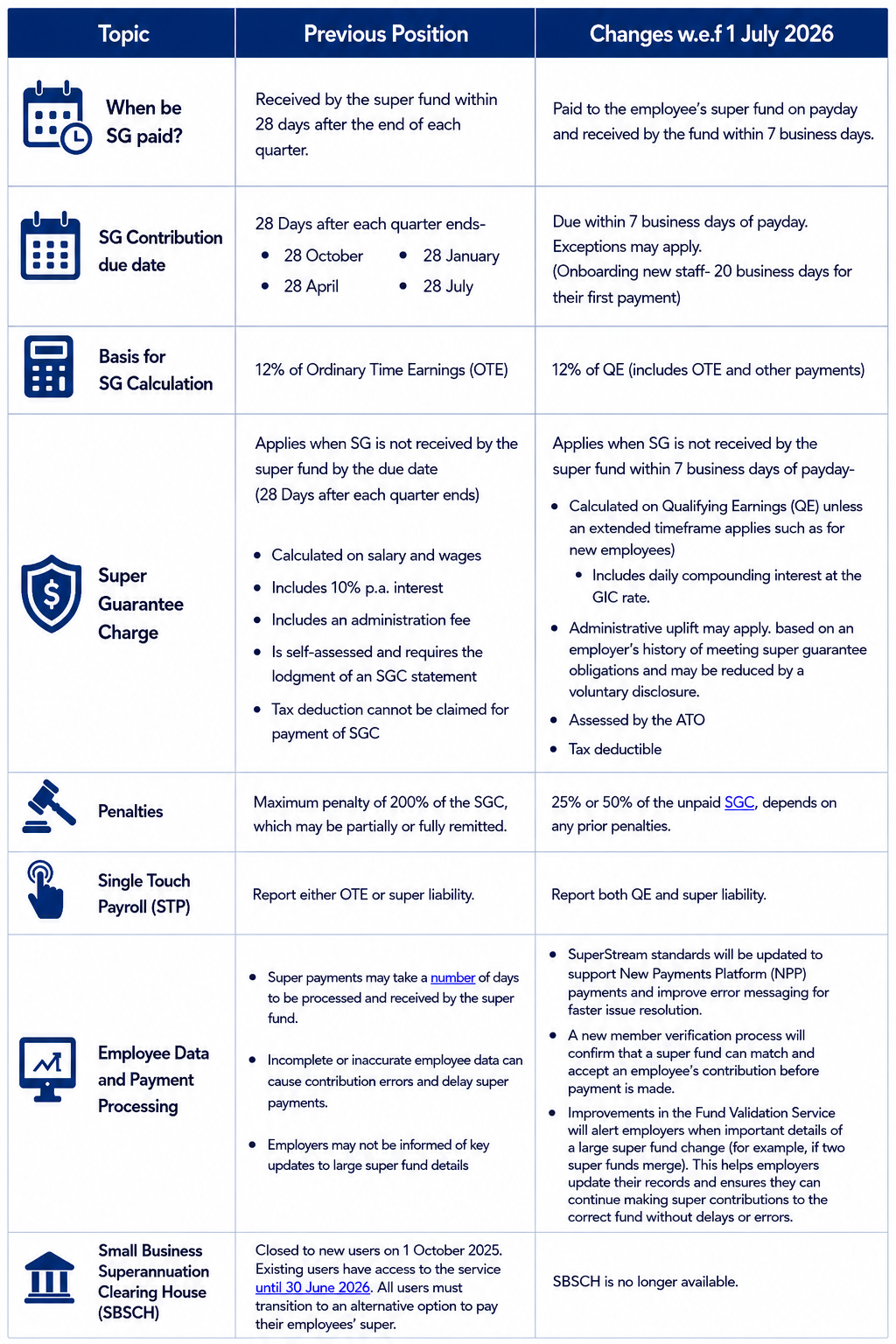
Under the previous system, employers generally had until 28 days after the end of each quarter to ensure SG contributions are received by employees' super funds. 

Effective 1 July 2026, employers will be required to: 


  • Calculate SG on Qualifying Earnings (QE) 
  • Pay SG at the same time employees are paid 
  • Ensure contributions are received by the employee's super fund within 7 business days of payday 
  • Report additional super information through Single Touch Payroll (STP).
Example
Payday: 15 August 2026
Current Rule: SG can generally be paid by 28 October 2026 (quarterly deadline).
New Rule: SG must be paid with the employee's wages and received by the super fund within 7 business days of payday.


2. New 7-Business-Day Payment Rule


From 1 July 2026, SG contributions must be: 

  • Calculated on payday; 

  • Paid on payday; and 

  • Received by the employee's super fund within 7 business days. 

This means employers can no longer rely on quarterly payment cycles or delayed processing through clearing houses. 

(Limited Extension for New Employees-A longer timeframe of up to 20 business days may apply in certain onboarding situations where a new employee's super fund details are still being established.)


3. Stronger Compliance and Penalty Regime


The Super Guarantee Charge (SGC) framework is also changing. Late payments are no longer a minor compliance issue. If superannuation contributions are not received by the employee's super fund within 7 business days of payday, the Superannuation Guarantee Charge (SGC) is automatically triggered. Under Payday Super, where SG is not received by the employee's super fund within the required timeframe, The ATO may impose:

  • Super Guarantee Charge (SGC) calculated on Qualifying Earnings
  • Daily compounding interest based on the General Interest Charge (GIC) rate

  • Administrative uplift amounts


  • Additional penalties for repeat non-compliance

Under the Payday Super regime, the Australian Taxation Office (ATO) will have significantly greater visibility over payment timing through Single Touch Payroll (STP) and super fund reporting, increasing the likelihood of non-compliance being identified promptly.
   

4. Small Business Superannuation Clearing House (SBSCH) Is Closing


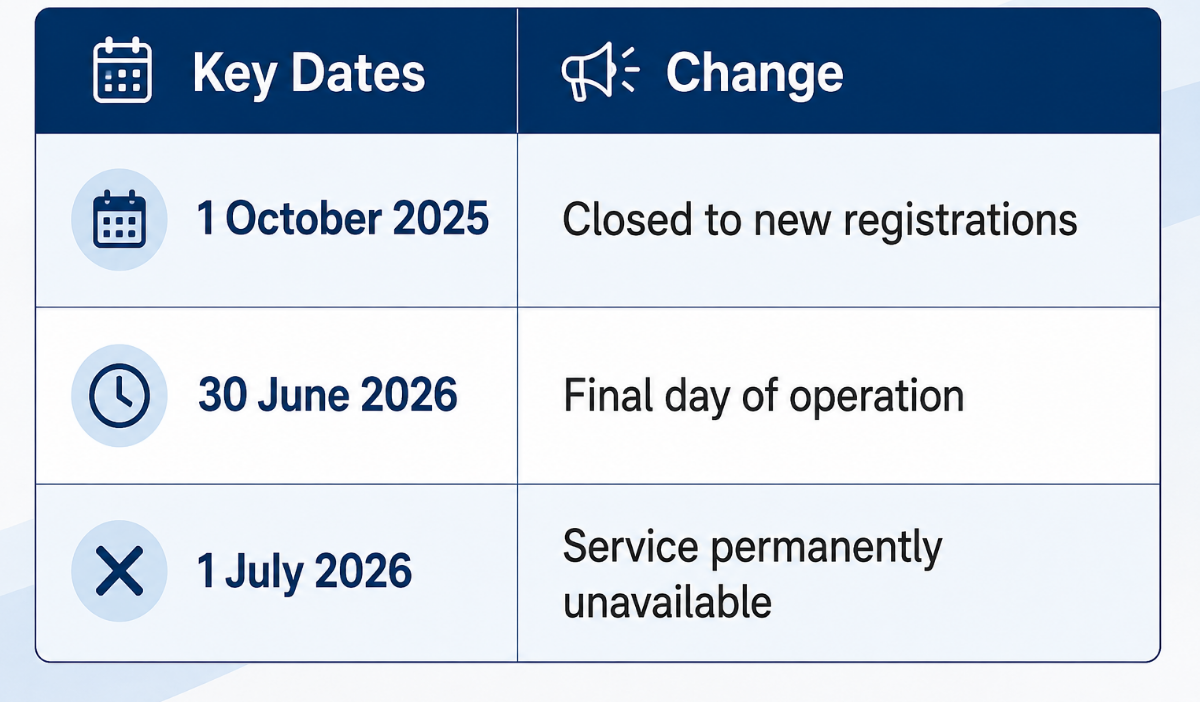
The ATO's Small Business Superannuation Clearing House (SBSCH) will permanently close from 1 July 2026.

Businesses currently relying on SBSCH should transition to an alternative Super Stream compliant solution as soon as possible.


https://stratus.campaign-image.com.au/images/27408000031842148_zc_v1_1782279355204_screenshot_2026_06_24_110509.png
   

5. Maximum Contribution Base (MCB) Moves to an Annual Limit


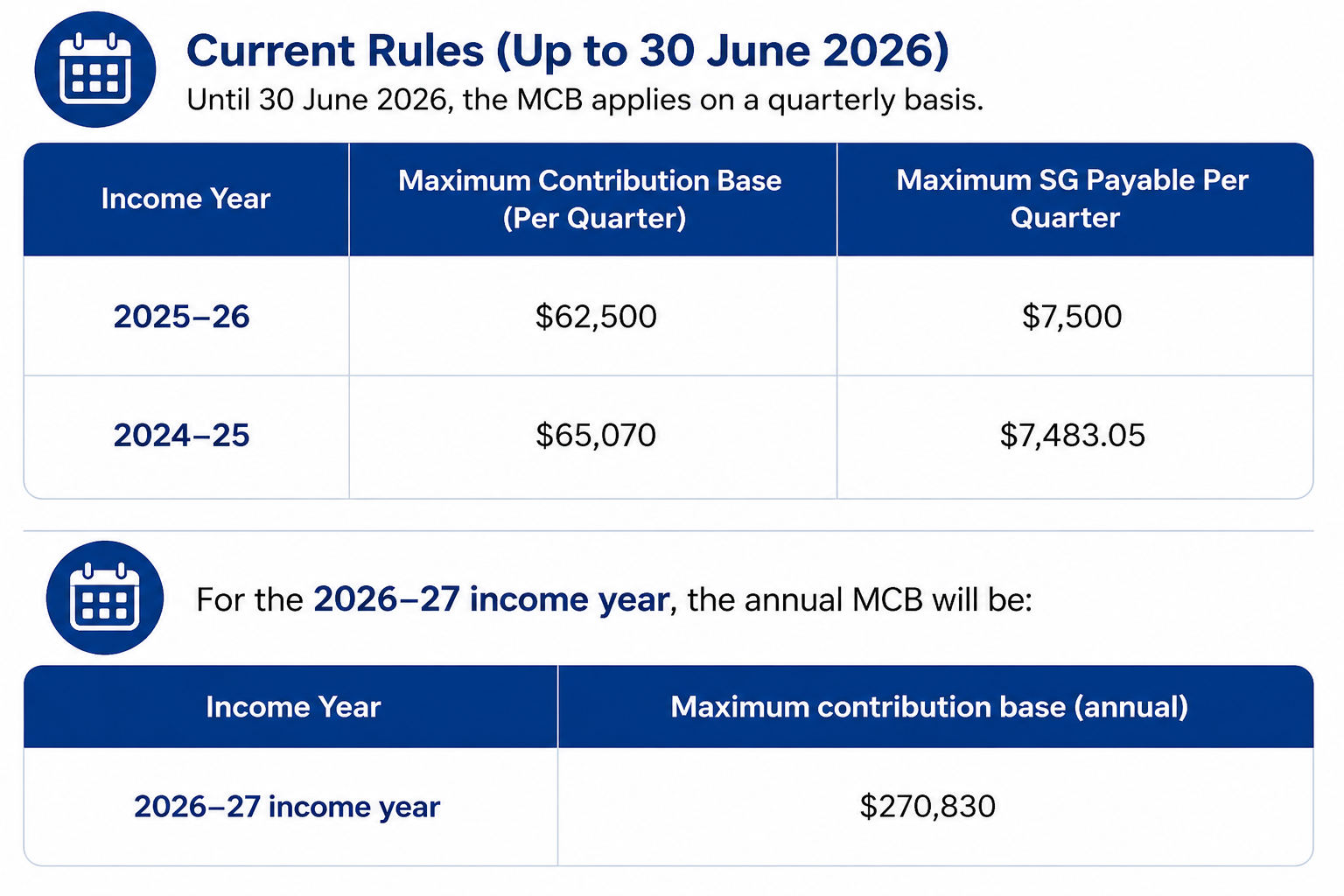
Another significant change under Payday Super is the move from a quarterly MCB to an annual MCB. 

The Maximum Contribution Base (MCB) is the upper limit on an employee's earnings for which an employer is required to pay Super Guarantee (SG) contributions. Earnings above this threshold do not attract additional SG obligations. The MCB prevents employers from having to pay compulsory super on very high levels of employee earnings.

   
https://stratus.campaign-image.com.au/images/27408000031842148_zc_v1_1773796813708_screenshot_2026_03_18_064923.png

From 1 July 2026 Once an employee's qualifying earnings reach the annual Maximum Contribution Base of $270,830, the employer's minimum SG obligation ceases for the remainder of that financial year, regardless of any further earnings.

Example – Annual Maximum Contribution Base from 1 July 2026

Assume Sarah earns $320,000 during the 2026–27 financial year.

  • Annual Maximum Contribution Base (MCB): $270,830
  • SG Rate: 12%
  • Sarah's total earnings: $320,000

SG Calculation:

$270,830 × 12% = $32,499.60
Although Sarah earns more than $270,830, her employer is only required to pay SG on earnings up to the annual MCB. ❌ No additional SG is required on the remaining $49,170 ($320,000 − $270,830) earned during the financial year.
   

6. SuperSream Upgrades and New Validation Processes

To support Payday Super, the ATO is modernizing the SuperStream framework. Key enhancements include:

  • New Member Verification- Before a contribution is sent, employers will be able to verify that the nominated super fund can successfully match and accept the employee's contribution. This should significantly reduce rejected contributions and payment delays.
  • Enhanced Fund Validation Service- Employers will receive earlier notification when major super funds change important details, including Fund mergers, USI changes, Fund closures etc. These improvements are expected to reduce processing errors and improve payment accuracy.
   

Changes At A Glance


Practical Steps Businesses Should Take Now


Visit www.trustdeed.com.au for more details or call us on(02) 9684 4199


Follow Us On

 You are receiving this email as you signed up for our newsletters.

 Want to change how you receive these emails?

You can Unsubscribe or Update your preferences

 
click here to unsubscribe from the mailing list
Share