Share
The Hidden Risk in Your SMSF’s SFLU Status
 

The 6 SMSF Statuses Every Trustee and Accountant Should Kno

News | Mansi Sharma | Released: 03/09/2026 | Read: 5 Mins

https://stratus.campaign-image.com.au/images/27408000035925725_zc_v1_1773796813708_screenshot_2026_03_18_064923.png
   

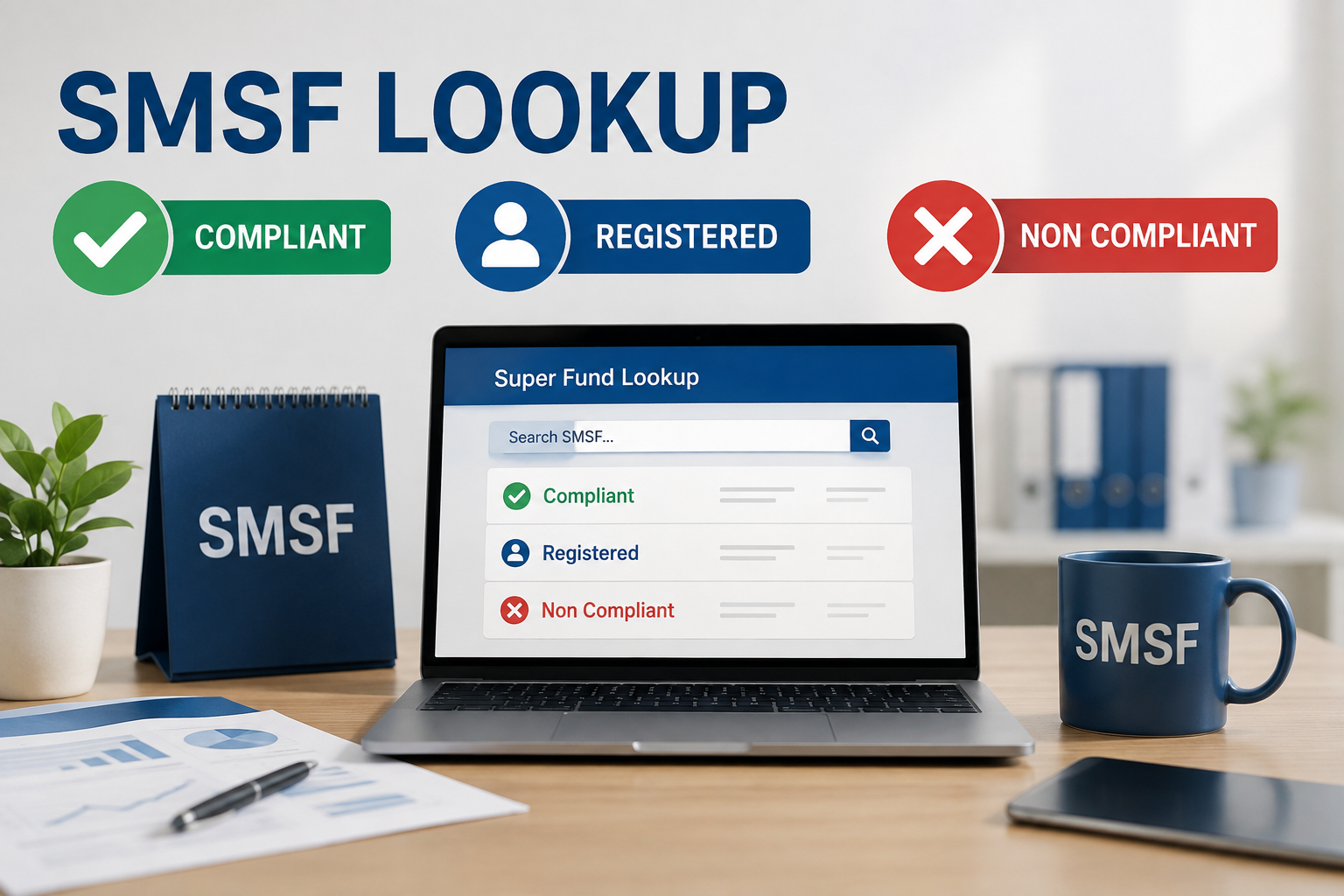
One word on the ATO’s Super Fund Lookup (SFLU) can make the difference between a super payment being accepted or rejected and can also affect the tax treatment of an SMSF. This is why checking SFLU For SMSF status becomes important. 


Super Fund Lookup (SFLU) is a free, public register that provides information about: 

  • Self-managed super funds (SMSFs) with an ABN 

  • Super funds regulated by the Australian Prudential Regulation Authority (APRA) 

SFLU provides important information about an SMSF’s current status. This status can affect whether the fund is eligible for concessional tax treatment and whether it can receive certain superannuation contributions or rollovers. SFLU can also be used to: 

  • Check a fund’s contact details 

  • Confirm whether a fund is still operating 

  • Check whether rollovers can be made into an SMSF 

  • Help employers confirm whether contributions to a fund can count towards their Super Guarantee (SG) obligations 

Most trustees have never looked at it. Most accountants only check it once something has already gone wrong. In this newsletter, we will discuss what SFLU shows, why it matters, and how trustees and accountants can stay ahead of potential issues. 


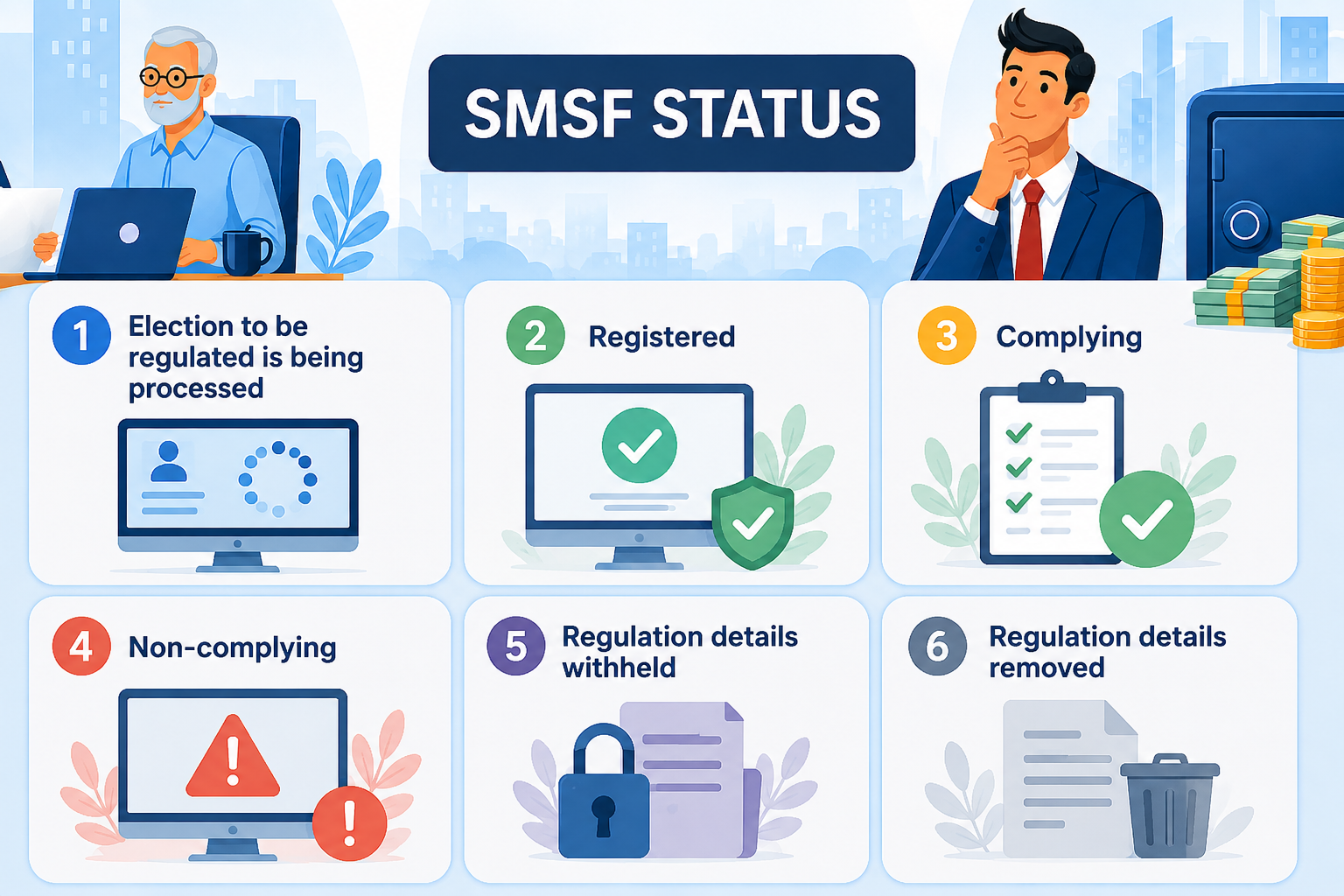
Understanding the Six SFLU Statuses


SFLU doesn't create these rules; it just displays the outcome of decisions made under the Superannuation Industry (Supervision) Act 1993 (SIS Act) and the Income Tax Assessment Act 1997 (ITAA 1997).

   
https://stratus.campaign-image.com.au/images/27408000035925725_zc_v1_1773796813708_screenshot_2026_03_18_064923.png
   

1. Election to be regulated is being processed


A fund is not automatically recognised as a superannuation fund. Under section 19 of the SIS Act, three key requirements must be met: 

  • A trustee must be appointed.  

  • The trustee must be a company or an individual trustee, and the fund must be maintained solely for providing retirement benefits and other permitted benefits.  

  • A written election must be made to the Commissioner within 60 days of the fund being established, stating that the fund is to be regulated under the SIS Act. 

That’s why a new SMSF may show “Election to be regulated is being processed” on SFLU while the ATO completes its checks. These checks can take between 2 and 56 days. This could delay the registration of your SMSF or prevent you from being added as a new trustee to a fund. While checks are being completed, a newly registered SMSF may show “Election to be regulated is being processed”. This means: 

  • The ATO is completing checks before confirming the fund as regulated. 

  • Rollovers from other super funds cannot be made. 

  • Employers cannot make Super Guarantee contributions. 


2. Registered


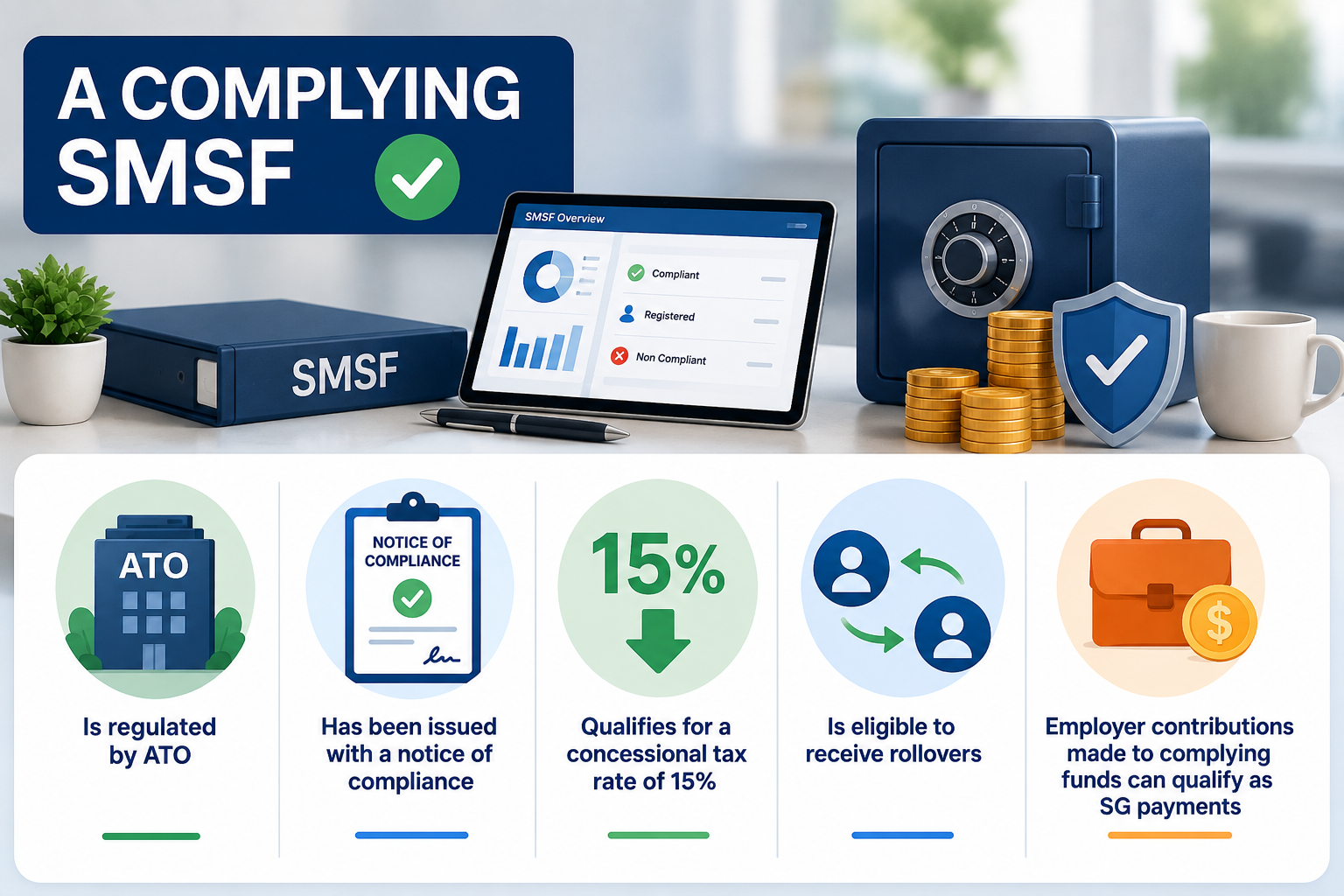
A 'Registered' SMSF is- 

  • is eligible to receive rollovers and transfers 

  • is regulated by the ATO 

  • has not been issued with a Notice of Compliance or a Notice of Non-compliance. 

From March 2019, new SMSFs can move to “Complying” status on SFLU sooner. A newly registered fund first appears as “Registered”, followed by “Complying” once the Notice of Compliance is issued. Previously, the status changed only after the fund lodged its first annual return. The earlier update provides clarity on the fund’s status and its ability to accept employer Super Guarantee contributions and rollovers. This earlier status update provides greater clarity about the fund’s ability to accept rollovers and employer Super Guarantee contributions and access concessional tax treatment. 


3. Complying Status — Section 42A


Being regulated isn't enough on its own. Under section 42A of the SIS Act, an SMSF must satisfy certain requirements to be treated as a complying superannuation fund for an income year. This includes being a resident regulated superannuation fund and passing the compliance test under section 42A (5).  An SMSF passes the test if:   


  • The trustees have not breached any regulatory requirements during the relevant year; or 

  • If a breach occurred, the Regulator may still treat the fund as complying after considering the seriousness of the breach, the tax consequences, and other relevant circumstances. 

   
https://stratus.campaign-image.com.au/images/27408000035925725_zc_v1_1773796813708_screenshot_2026_03_18_064923.png
   

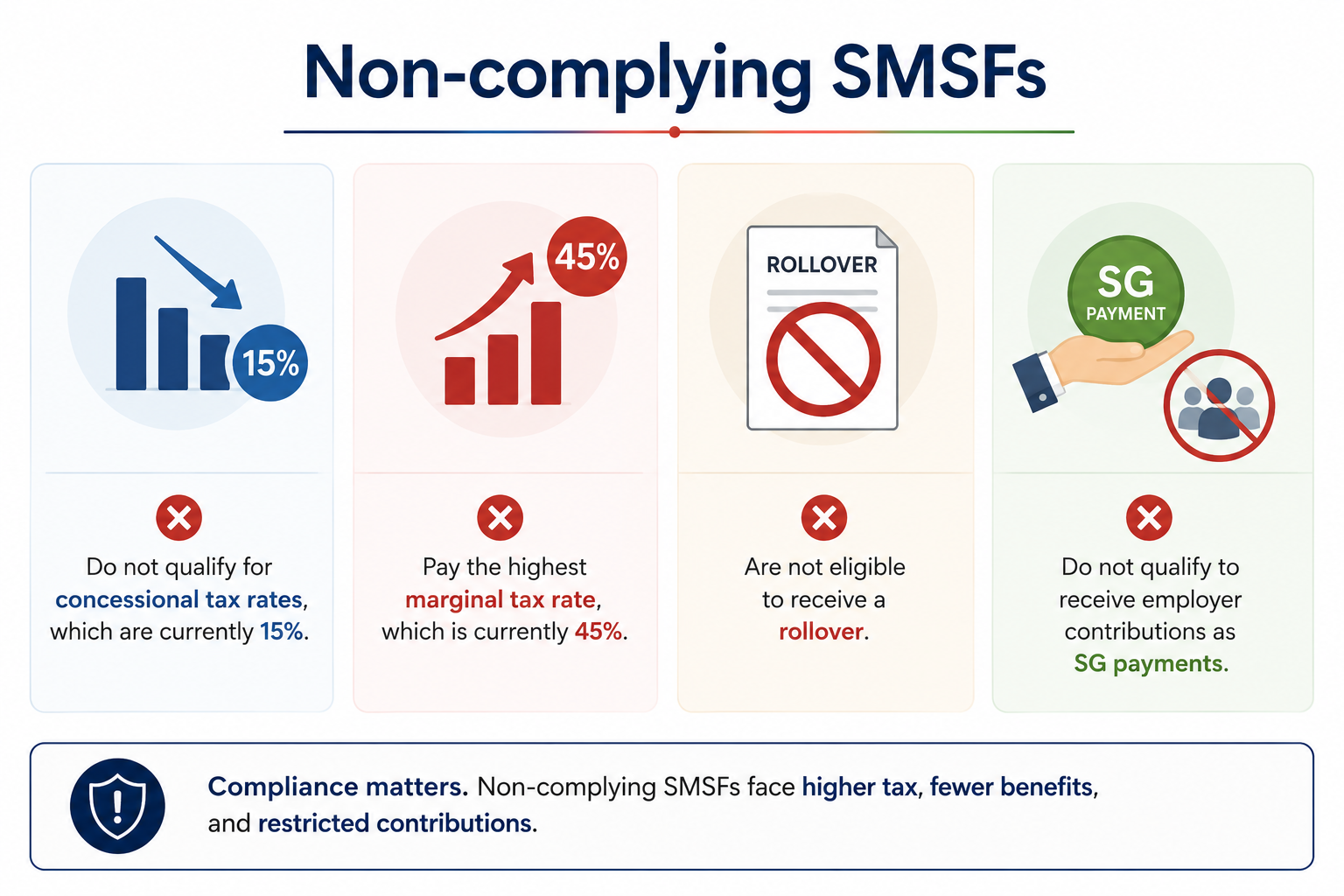
4. Non-Complying SMSF


A non-complying SMSF either: 

  •  does not meet the residency conditions to be an Australian super fund 
  •  has been issued with a Notice of non-compliance because it does not comply with the Superannuation Industry (Supervision) Act 1993 regulatory provisions.

Under section 42 of the SIS Act, an SMSF must meet the relevant residency requirements to maintain complying status. For this purpose, section 10 of the SIS Act refers to the definition of an Australian superannuation fund under section 295-95(2) of the ITAA 1997. The fund must satisfy all three requirements according to TR 2008/9

  • Established in Australia — the fund was established in Australia or has an asset located in Australia. 

  • Central management and control — ordinarily located in Australia. 

  • Active member test — where there are active members, at least 50% of the relevant interests or entitlements must relate to Australian-resident active members. 

Good news for members working overseas: since 1 July 2022, a trustee or member can now be temporarily overseas for up to 5 years (up from 2) without this counting against the fund. Failure to meet any one of these requirements can affect the fund’s status as an Australian superannuation fund, which may in turn impact its complying status and tax treatment.

   
https://stratus.campaign-image.com.au/images/27408000035925725_zc_v1_1773796813708_screenshot_2026_03_18_064923.png
   

5. Regulations Details Withheld


When the ATO has concerns about an SMSF’s compliance or operation, it may withhold the fund’s regulation details while further enquiries are conducted. There are many reasons why this may occur and are unique to each SMSF. During this period: 

  • APRA-regulated funds generally cannot make rollovers to the SMSF. 

  • Employers should avoid making contributions until the fund’s compliance status is confirmed. 


6. Regulations Details Removed


If an SMSF annual return is more than two weeks overdue, its regulation details may be removed from SFLU. 

  • Once the overdue return is lodged, the status is updated automatically, generally twice a week. 

  • The updated status will appear on SFLU the following business day. 

  • If the corporate trustee is deregistered by ASIC, the fund’s regulation details may also be removed. Once you re-register your corporate trustee or restructure your fund, you need to phone us on 13 10 20 to request to have the fund reinstated on Super Fund Lookup. 

  • While regulation details are removed, rollovers cannot be made and employers should avoid making contributions until the fund’s status is restored. 

Unlike complying and non-complying, these two statuses (5 and 6) aren't a legal finding under s42A. They're simply the ATO flagging something administratively.  


Example


The situation- Mark and Sarah run an SMSF with a corporate trustee. Mark moves to Singapore, while Sarah remains in Australia. Although Sarah manages the day-to-day administration, Mark continues making the fund’s key strategic decisions from overseas. 


Later, the accountant identifies a potential central management and control issue. If the fund’s strategic decisions continue to be made overseas, it may risk failing the SMSF residency requirements as the person actually driving the strategic decisions is Mark, overseas. That means the "where it's run" test may no longer point to Australia — putting the fund at risk of failing its residency test. If that continues past the 5-year window, the fund could lose complying status and jump to a 45% tax rate.


The lesson: it's not about where members live on paper. It's about who is actually making the decisions, and from where. More examples includes:

  • A newly set-up SMSF tries to receive a rollover a few days after it is established. The rollover is rejected because the fund is still showing as “Election being processed” on SFLU.
  • An SMSF lodges its annual return two weeks late. The fund is then removed from SFLU at the beginning of the following month. Until the issue is resolved, rollovers and employer super payments may be affected.


Case Study


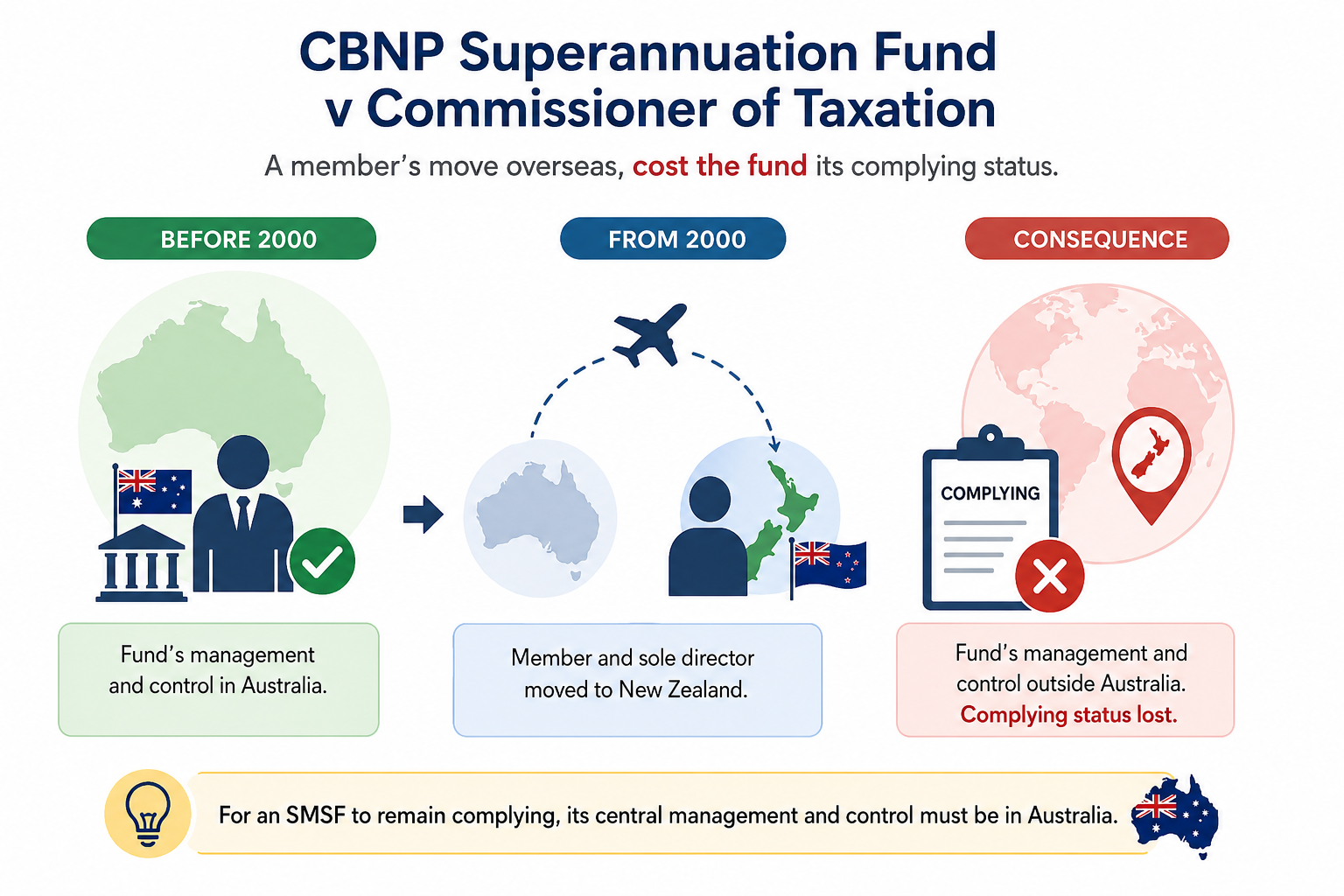
The Commissioner issued a Notice of Non-Compliance after determining that the fund failed the residency requirements. The Court in appeal confirmed that: 

  • The SMSF was not a resident superannuation fund because its central management and control was overseas. 

  • As a result, the fund was non-complying, exposing it to significant tax consequences.  


Key Considerations for Trustees and Accountants


  1. Check SFLU before you move money — before every rollover or contribution, not after it bounces. It only takes a few seconds. 
  2. Don't cut it close on lodgment — details disappear just two weeks after a late return, with no warning letter first. Treat the due date as final. 

  3. Talk about it before someone moves overseas — if a member or trustee is heading abroad for work, review the fund's situation before they leave, not after. 

  4. Put decision-making in writing — clear minutes showing an Australian-based trustee is genuinely in charge are the best protection if questions ever come up. 

  5. Keep an eye on the corporate trustee — if it gets deregistered by ASIC, the fund's SFLU details disappear automatically. A quick yearly ASIC check catches this early. 

  6. Don't panic over "withheld" or "removed" — it's not a finding of wrongdoing. But don't ignore it either, since other funds and banks will treat it as a warning sign until it's cleared up. 


Final Thought


An SMSF’s status on Super Fund Lookup can be one of the earliest indicators that something may be wrong yet it is often overlooked. The underlying principles are straightforward: the fund must continue to be genuinely managed and controlled from Australia, and its records and regulatory details must remain up to date.

For trustees and advisers, regularly checking Super Fund Lookup should therefore be part of routine SMSF administration, rather than something considered only when an issue arises.

This bulletin is general information only and restates the ATO's published position and relevant SIS Act/ITAA provisions as at the date of publication. It is not personal financial, tax, or legal advice. Trustees and accountants should consider individual circumstances and seek professional advice before acting.


Visit www.trustdeed.com.au for more details or call us on(02) 9684 4199


Follow Us On

 You are receiving this email as you signed up for our newsletters.

 Want to change how you receive these emails?

You can Unsubscribe or Update your preferences

 
click here to unsubscribe from the mailing list
Share